How Wearables Could Change Workers Compensation
In a world where technology touches almost everything we do, even the Workers Compensation Insurance Tasmania must have, is starting to feel the shift.
At RSM Tasmania, we’re seeing new conversations emerge about how workplace tech — especially wearables — could change the way injuries are prevented, reported, and managed.
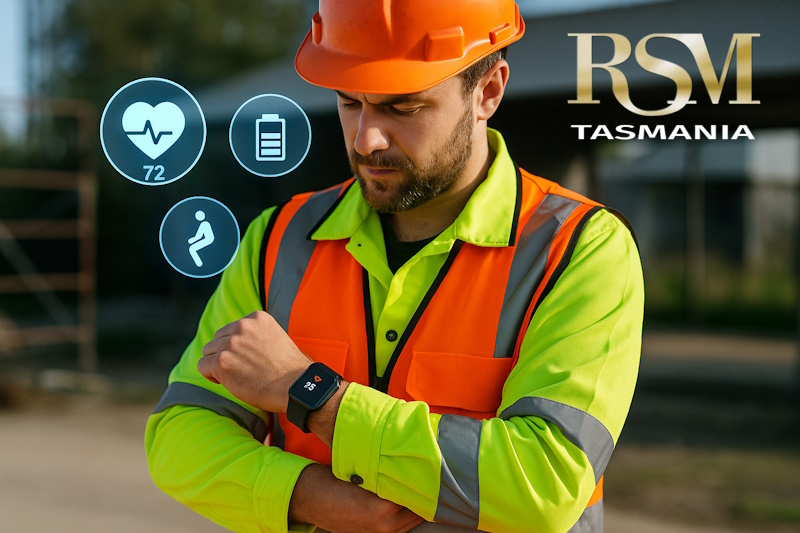
What are workplace wearables?
Think smartwatches, fatigue-tracking vests, or posture sensors clipped to uniforms. These devices collect real-time data on a worker’s movements, environment, or vital signs. The idea is simple: spot risks early, act before an injury occurs, and improve recovery if something goes wrong.
The upside for employers
For Tasmanian businesses, the potential benefits are big:
-
- Early warning signs — devices can detect fatigue or repetitive strain before it becomes a serious injury.
- Better reporting — wearables can capture exactly when and how an incident happened.
- Safer environments — sensors can flag exposure to heat, noise, or vibration that might otherwise go unnoticed.
- Improved return-to-work — tracking recovery progress can help doctors and employers design safer pathways back to work.
The challenges to consider
Of course, it’s not all smooth sailing. Employers need to weigh up:
-
- Privacy — staff may not be comfortable with constant monitoring.
- Cost — devices and data systems don’t come cheap.
- Liability questions — if a wearable raises a warning that isn’t acted on, where does responsibility lie?
What this means for workers compensation
As technology becomes more common, claims could shift. Imagine fewer musculoskeletal injuries thanks to posture monitoring, or faster claims processing because data provides clear evidence. On the flip side, new questions may arise about how wearable data is used in disputes.
Forward-looking employers are already experimenting with wearables in industries like construction, logistics, and healthcare. In high-risk roles, devices that track fatigue or hazardous exposure could help avoid major claims altogether.
For office environments, posture and ergonomic monitors may reduce repetitive strain injuries — still one of the most common causes of lost time.
The important thing for employers is to keep workers compensation cover up to date — and make sure it reflects the changing risks of modern workplaces. That’s where having a broker matters.
RSM Tasmania works with local businesses to understand both traditional risks and emerging ones, tailoring cover that adapts as the workplace evolves.
For more on your responsibilities, you can refer to WorkSafe Tasmania’s guidance on workers compensation.
At RSM Tasmania, we help businesses keep pace with change — whether it’s managing long-standing risks or preparing for the impact of new technologies.
To learn more about workers compensation and practical steps for your business, visit our dedicated site: wcomptas.com.au.
Because protecting people means protecting the future of your business.
Remember, this article is general in nature and doesn’t take into account your specific objectives, financial situation, or needs. For advice tailored to your circumstances, have a chat with us at RSM Tasmania Insurance Brokers Hobart.
Talk to Roger Hosie and stay ahead with RSM Tasmania’s insights.
Call Now! (03) 6244 7854, or email .