The Injury Didn’t Happen at Work… But The Rules Still Apply
For many employers, it seems like a simple line in the sand. If an injury doesn’t happen at work… then it’s not a work claim. At RSM Tasmania we know this is not the case.
When it comes to the Workers compensation insurance Tasmania needs, it’s not always that straightforward — and that’s where things can quickly become confusing.
Not All Work Injuries Happen On-Site
Work-related injuries aren’t limited to what happens inside your workplace.
In Tasmania, a claim may still be valid if the injury occurs while an employee is:
-
- Travelling between job sites
- Running work-related errands
- Attending off-site meetings or training
- Taking authorised breaks in certain circumstances
In other words, the location of the injury doesn’t always determine responsibility.
What matters is whether the activity was connected to employment.
When “Not at Work” Still Becomes Your Responsibility
This is where many employers are caught off guard.
An employee might:
-
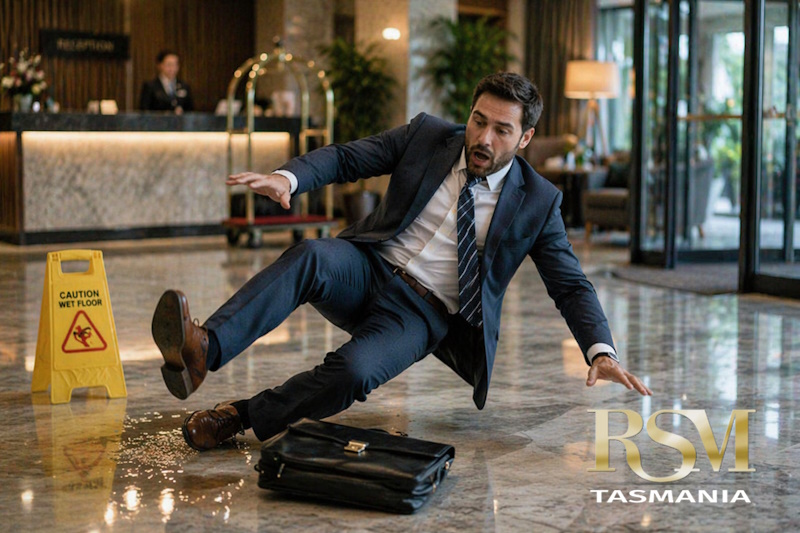
- Slip while picking up supplies
- Injure themselves while travelling for work
- Be hurt during a work-related task away from the main site
- Or simply be attending a conference
Even though it didn’t happen on your premises, the situation may still fall under your workers’ compensation obligations.
That’s why it’s important to understand that responsibility can extend beyond your physical workplace.
The Real Risk: Misunderstanding Your Obligations
The biggest issues don’t usually come from the injury itself.
They come from delays, uncertainty, or incorrect assumptions about what needs to be done.
Failing to recognise a potentially valid claim early can lead to:
-
- Delayed reporting
- Complications with insurers
- Increased costs and administrative pressure
WorkSafe Tasmania provides clear guidance on what constitutes a workplace incident and employer responsibilities.
It’s Not About Blame — It’s About Process
Workers’ compensation isn’t designed to assign fault.
It’s there to ensure that injured workers receive appropriate support, while protecting employers from the full financial impact of a claim.
The key is responding correctly and promptly — even when the situation isn’t clear-cut.
Why This Matters for Tasmanian Employers
For many small and medium businesses, especially those with mobile staff or off-site work, these “grey area” situations are more common than expected.
Understanding where your responsibility starts — and where it may extend beyond the workplace — can make a significant difference when something goes wrong.
If you’d like a practical breakdown of how claims work, including what to do step-by-step after an incident, we’ve outlined it in detail here.
Final Thought
If an employee was injured tomorrow — outside your workplace, but during something work-related — would you know what to do next?
It’s a simple question.
But one that highlights why clarity around workers’ compensation matters more than most realise.
Remember, this article is general in nature and doesn’t take into account your specific objectives, financial situation, or needs. For advice tailored to your circumstances, have a chat with us at RSM Tasmania Insurance Brokers Hobart.
Talk to Roger Hosie and stay ahead with RSM Tasmania’s insights.
Call Now! (03) 6244 7854, or email .
You can also follow RSM Tasmania on Facebook and LinkedIn for regular business insights.
For more information specifically about workers compensation in Tasmania,
visit: Workers Compensation Insurance Brokers Tasmania